
Introduction
HR Jobs in India are growing fast because companies now understand that employees are their biggest strength. Human Resources (HR) professionals play an important role in hiring the right people, managing employee performance, handling salaries, and maintaining a healthy work culture. From startups to multinational companies, HR jobs are available in almost every industry in India.
This article explains everything about HR jobs in India, including roles, skills, salary, career growth, and how to start a career in HR. The content is written in simple English so that students, freshers, and working professionals can easily understand it.
What Are HR Jobs?
HR jobs focus on managing people in an organization. HR professionals make sure that employees are happy, productive, and following company rules. They also help companies grow by hiring skilled talent and improving employee engagement.
HR is not just about hiring and firing. It includes training, payroll, performance management, compliance, and workplace culture.
Why HR Jobs Are Important in India
India has a large workforce, and companies need skilled HR professionals to manage employees properly. With the rise of IT companies, startups, remote work, and global businesses, the demand for HR professionals has increased a lot.
Key reasons HR jobs are important:
- Growing corporate sector
- Increasing employee expectations
- Focus on workplace laws and compliance
- Need for skilled talent management
- Emphasis on employee well-being
Types of HR Jobs in India
There are many types of HR jobs depending on experience and specialization.
1. HR Recruiter / Talent Acquisition
Recruiters are responsible for hiring employees. They post job openings, screen resumes, conduct interviews, and select candidates.
2. HR Generalist
An HR Generalist handles multiple HR activities such as recruitment, payroll, attendance, employee relations, and compliance.
3. HR Manager
HR Managers lead the HR department. They create HR policies, manage teams, and support business goals.
4. Payroll and Compensation Specialist
They manage salaries, incentives, bonuses, PF, ESI, and tax deductions.
5. Training and Development Manager
This role focuses on employee training, skill development, and career growth.
6. HR Business Partner (HRBP)
HRBPs work closely with management to align HR strategies with business needs.
HR Job Roles and Responsibilities
| HR Role | Key Responsibilities |
| HR Recruiter | Hiring, interviews, onboarding |
| HR Executive | Attendance, payroll support, documentation |
| HR Generalist | Recruitment, employee relations, compliance |
| HR Manager | Policy making, leadership, HR strategy |
| Payroll Officer | Salary processing, tax, PF, ESI |
| Training Manager | Employee training, skill development |
Skills Required for HR Jobs in India
To succeed in HR jobs, certain skills are very important.
Soft Skills
- Communication skills
- Problem-solving ability
- Leadership qualities
- Time management
- Conflict handling
Technical Skills
- Knowledge of labor laws
- Payroll and HR software
- Recruitment tools
- MS Excel and reporting
- Performance management systems
Educational Qualification for HR Jobs
Most HR professionals in India follow these paths:
- Bachelor’s degree (BBA, B.Com, BA)
- MBA or PGDM in Human Resources
- Diploma or certification in HR Management
- Online HR courses and workshops
Freshers with good communication skills can also start as HR trainees or recruiters.
HR Jobs in India – Detailed Salary Structure
| HR Job Title | Experience Level | Monthly Salary (₹) | Annual Salary (₹ LPA) |
| HR Intern | Fresher | 8,000 – 15,000 | 1 – 1.8 |
| HR Trainee | Fresher | 12,000 – 20,000 | 1.5 – 2.4 |
| HR Executive | 0–2 Years | 18,000 – 30,000 | 2.2 – 3.6 |
| HR Recruiter | 0–2 Years | 20,000 – 35,000 | 2.5 – 4.2 |
| IT Recruiter | 1–3 Years | 25,000 – 45,000 | 3 – 5.5 |
| HR Coordinator | 1–3 Years | 22,000 – 40,000 | 2.6 – 4.8 |
| HR Operations Executive | 2–4 Years | 30,000 – 55,000 | 3.6 – 6.5 |
| Payroll Executive | 2–5 Years | 35,000 – 60,000 | 4 – 7 |
| HR Generalist | 3–6 Years | 40,000 – 75,000 | 5 – 9 |
| Talent Acquisition Specialist | 3–6 Years | 45,000 – 80,000 | 5.5 – 9.5 |
| Training & Development Executive | 4–7 Years | 50,000 – 85,000 | 6 – 10 |
| HR Business Partner (HRBP) | 5–8 Years | 65,000 – 1,20,000 | 8 – 15 |
| Compensation & Benefits Manager | 6–10 Years | 75,000 – 1,40,000 | 9 – 18 |
| Employee Relations Manager | 6–10 Years | 80,000 – 1,50,000 | 10 – 18 |
| HR Manager | 6–12 Years | 90,000 – 1,80,000 | 11 – 22 |
| Senior HR Manager | 10–15 Years | 1,20,000 – 2,50,000 | 15 – 30 |
| HR Director | 12–18 Years | 2,00,000 – 4,00,000 | 24 – 48 |
| Chief Human Resources Officer (CHRO) | 15+ Years | 3,00,000 – 6,00,000+ | 36 – 70+ |
Top Industries Hiring HR Professionals
HR jobs are available in almost every sector:
- IT and Software
- Banking and Finance
- Healthcare
- Manufacturing
- Education
- E-commerce
- Startups and MNCs
Career Growth in HR Jobs
HR jobs offer excellent career growth. A fresher can grow from HR Executive to HR Manager and then to HR Director or CHRO (Chief Human Resources Officer).
Career growth depends on:
- Skills and experience
- Industry knowledge
- Leadership abilities
- Continuous learning
How to Get HR Jobs in India
Follow these steps to start or grow your HR career:
- Complete relevant education
- Improve communication skills
- Learn HR tools and software
- Apply on job portals like Naukri, Indeed, LinkedIn
- Build a strong resume
- Do internships or entry-level roles
Future Scope of HR Jobs in India
The future of HR jobs in India is very bright. With AI, HR analytics, and remote work trends, HR roles are becoming more strategic. Companies now expect HR professionals to support business growth, employee satisfaction, and innovation.
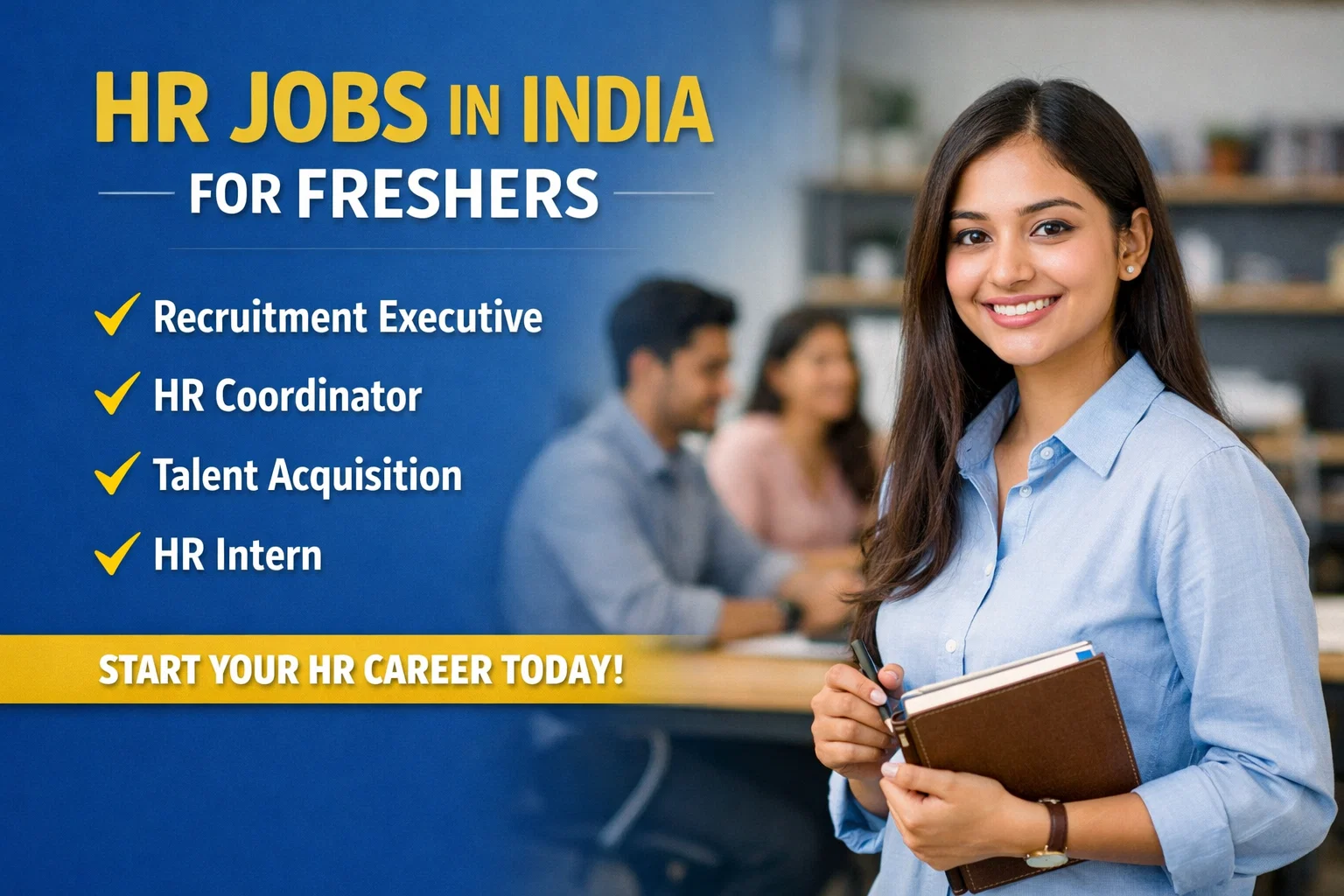
HR jobs in India for freshers are a great starting point for students who want a corporate career. Many companies hire fresh graduates as HR Executives, HR Recruiters, or HR Trainees. These roles help freshers learn basic HR functions such as recruitment, documentation, attendance tracking, and employee coordination.
Freshers should focus on:
- Clear communication
- Basic HR knowledge
- Professional behavior
- Willingness to learn
Starting early in HR helps build a strong foundation for future leadership roles.
HR Jobs in India After MBA
After completing an MBA in Human Resources, candidates get better job roles and higher salaries. MBA graduates are usually hired for positions such as HR Manager, HR Business Partner, Talent Manager, or Employee Relations Manager.
Benefits of HR jobs after MBA:
- Faster career growth
- Higher salary packages
- Leadership responsibilities
- Strategic decision-making roles
Top companies prefer MBA HR professionals because they understand both people management and business strategy.
Top Companies Offering HR Jobs in India
Many reputed companies regularly hire HR professionals across India.
| Company Name | Industry |
| TCS | IT & Software |
| Infosys | IT Services |
| Wipro | Technology |
| Reliance Industries | Manufacturing & Retail |
| HDFC Bank | Banking |
| Amazon | E-commerce |
| Accenture | Consulting |
Working in these companies gives better exposure, job security, and career growth.
HR Jobs in India: Work-from-Home Opportunities
With digital transformation, HR jobs in India now also offer work-from-home options. Roles such as HR Recruiter, Talent Sourcer, and HR Coordinator can be done remotely.
Popular remote HR roles:
- IT Recruiter
- Freelance Recruiter
- HR Operations Executive
- HR Consultant
Work-from-home HR jobs are ideal for women professionals, freelancers, and part-time job seekers.
HR Certifications That Improve Job Chances
Certifications increase credibility and improve salary prospects in HR jobs.
Popular HR certifications in India:
- SHRM Certification
- SAP HCM
- Certified HR Professional (CHRP)
- Payroll Management Certification
- Labor Law Certification
These certifications help HR professionals stand out in job interviews.
Common Challenges in HR Jobs
HR jobs are rewarding but also challenging.
| Challenge | Description |
| Employee Conflicts | Handling disputes professionally |
| Hiring Pressure | Meeting deadlines for recruitment |
| Policy Compliance | Following labor laws |
| Performance Issues | Managing underperforming staff |
| Employee Retention | Reducing attrition |
Strong communication and decision-making skills help overcome these challenges.
HR Jobs in India: Gender Diversity & Opportunities
HR is one of the most gender-diverse professions in India. Both men and women have equal growth opportunities. Many companies also encourage women returnees and flexible HR roles.
Reasons HR is ideal for women:
- Flexible work options
- Work-life balance
- Leadership roles
- Remote job opportunities
Difference Between HR and Admin Jobs
Many people confuse HR with Admin roles. Here is a simple comparison:
| HR Jobs | Admin Jobs |
| Focus on people | Focus on office operations |
| Hiring and training | Facility management |
| Employee engagement | Vendor coordination |
| HR policies | Office maintenance |
HR roles are more strategic and growth-oriented.
HR Jobs in India: Future Trends
The future of HR jobs in India is changing with technology.
Key trends:
- HR Analytics
- Artificial Intelligence in hiring
- Employee wellness programs
- Remote workforce management
- Diversity and inclusion initiatives
HR professionals who learn new tools and adapt to trends will have better career opportunities.
FAQs – HR Jobs in India
Q1. Are HR jobs good in India?
Yes, HR jobs offer stable careers, good salaries, and long-term growth.
Q2. Can freshers apply for HR jobs?
Yes, freshers can start as HR Executives or Recruiters.
Q3. Is MBA compulsory for HR jobs?
No, but an MBA helps in faster growth and higher salary.
Q4. What is the highest position in HR?
CHRO (Chief Human Resources Officer).
Q5. Do HR jobs have work-from-home options?
Yes, many HR roles now offer remote or hybrid work.
Conclusion
HR Jobs in India offer stable careers, good salaries, and long-term growth. Whether you are a fresher or an experienced professional, HR is a field with many opportunities. With the right skills, education, and attitude, anyone can build a successful career in Human Resources.
View More :- Security Guard Job Guide: Salary, Duties & Career Path